
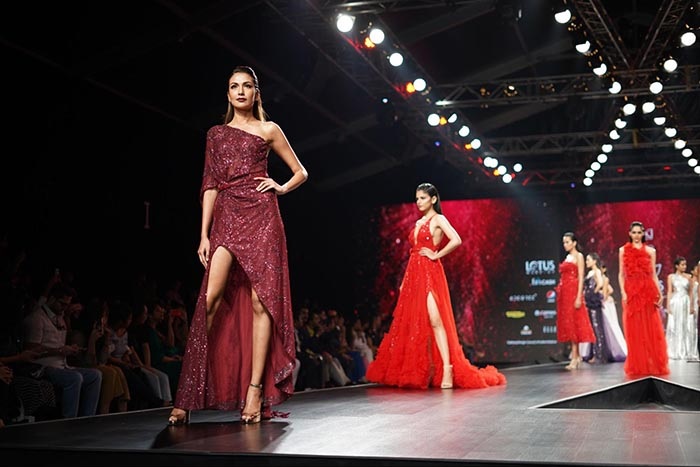

There is a persistent myth outside the fashion industry that a successful model relies entirely on a single, unmistakable signature look. We are culturally conditioned to remember the iconic pout, the specific runway strut, or the trademark piercing gaze of a supermodel. However, for the working professional navigating the trenches of the modern booking landscape, relying on a static image is a massive liability. The contemporary modeling industry does not reward one-trick ponies; it rewards chameleons.
As digital media fragments and brand identities become increasingly fluid, the rigid walls that once separated high fashion, commercial lifestyle, and fitness modeling have collapsed. To survive and thrive in this new ecosystem, a model must possess the physical control and psychological flexibility to seamlessly transition between vastly different aesthetic languages. Versatility is no longer just a bonus skill on a composite card; it is the fundamental requirement for career longevity.
The Erasure of Rigid Industry Boundaries
Decades ago, agencies strictly categorized their talent boards. You were either an editorial model who walked runways and shot for avant-garde magazines, or you were a commercial model who smiled in department store catalogs and television commercials. The two worlds rarely intersected. Editorial models were considered too severe for mainstream commercial work, and commercial models were deemed too approachable for high fashion.
The explosion of e-commerce and the ubiquity of social media marketing destroyed this binary system. Today, luxury heritage houses launch streetwear capsule collections that require a gritty, urban lifestyle approach. Simultaneously, mainstream athletic brands produce highly stylized, editorial-leaning campaigns to elevate their cultural cachet. Brands now demand talent capable of walking the razor-thin line between aspirational high fashion and relatable commercial appeal. If a model cannot adapt their physical energy to match the shifting tone of a client’s mood board, the client will simply book someone else who can.
Mastering the Physical Vocabulary of Different Genres
Transitioning between modeling genres requires much more than a wardrobe change and a new makeup palette. It requires a complete recalibration of your physical vocabulary. Every genre demands a specific style of movement, facial tension, and spatial awareness.
High Fashion and Editorial: The Art of the Avant-Garde
When working in high fashion and editorial modeling, the goal is rarely to look conventionally pretty. The objective is to sell an emotion, a structural silhouette, or a provocative concept. This genre requires an intense awareness of body geometry. Models must know how to elongate their limbs, create sharp angles with their joints, and hold physically taxing poses that look effortless on camera. The facial expressions are often stoic, moody, or intensely piercing. In editorial work, you are not a person interacting with a product; you are a living architectural element interacting with the light and the garment.
Commercial and Lifestyle: The Science of Relatability
Commercial modeling requires the exact opposite skill set. When shooting a lifestyle campaign for a hotel chain, a skincare brand, or a household product, the client wants warmth, approachability, and authentic joy. The camera must capture you in motion, making the scenario look entirely candid. This requires fluid, continuous movement rather than static posing. You must master the art of the genuine laugh, the subtle, relaxed smile, and the ability to project an effortless charm. The difficulty in commercial modeling lies in manufacturing authentic emotion on demand, often in a freezing studio at six in the morning surrounded by thirty crew members.
Fitness and Athletic: The Technical Discipline
Fitness modeling introduces a highly technical layer of body control. It is not enough to simply be in great shape; you must know how to activate and isolate specific muscle groups on command so they catch the studio lighting perfectly. A versatile model understands how to adjust their breathing to keep their core engaged without looking stiff or strained in the face. Whether demonstrating a yoga pose or simulating a high-intensity sprint, the kinetic energy must look powerful, explosive, and anatomically precise.
The Financial Imperative of Being a Chameleon
From a purely business perspective, versatility is directly tied to your earning potential. The modeling industry is notoriously cyclical, and specific trends fall out of favor rapidly. If your entire portfolio consists solely of moody, grunge-inspired editorial shots, your income will completely dry up the moment the industry pivots back toward bright, commercial glamour.
A versatile model works year-round because they can tap into multiple revenue streams. They can shoot a highly paid, anonymous e-commerce catalog on Monday, film a commercial television spot on Wednesday, and shoot an edgy editorial spread on Friday. Furthermore, modeling agencies heavily prioritize signing and pushing versatile talent. An agent’s goal is to maximize their return on investment. A model who can be confidently pitched to ninety percent of the agency’s client roster is infinitely more valuable than a niche model who can only be submitted for ten percent of the casting briefs.
Developing Your Versatility Toolkit
Versatility is rarely an innate talent; it is a learned skill that requires deliberate practice and continuous education. The best models view themselves not just as faces, but as silent actors.
Many top-tier models invest heavily in acting classes and movement workshops. Studying the Meisner technique or taking improvisational acting classes teaches you how to drop your self-consciousness and inhabit a character instantly. When a creative director asks you to act like a wealthy socialite waiting for a delayed train, or a carefree bohemian on a road trip, acting training gives you the emotional database to pull from.
Additionally, versatile models are meticulous researchers. Before walking onto a set, they study the client’s previous campaigns, the photographer’s lighting style, and the specific visual language of the brand. You cannot deliver what a client wants if you do not understand the aesthetic history of their company. Coming to set pre-calibrated to the client’s specific genre instantly establishes you as a deeply professional, high-value asset.
The Psychological Flexibility Required on Set
Perhaps the most difficult aspect of working across multiple genres is managing the psychological whiplash. In a single week, you may work with a highly technical commercial photographer who micromanages every millimeter of your posture, followed by a chaotic editorial photographer who blasts music and tells you to just move freely and ignore the camera entirely.
Navigating this requires complete detachment from your own ego and vanity. In a commercial shoot, you might be asked to tone down your natural edge to look more wholesome and mainstream. In an editorial shoot, a stylist might put you in bizarre, intentionally unflattering garments and ask you to contort your body into strange, uncomfortable positions. A truly versatile model understands that the shoot is never about them; it is always about executing the creative director’s vision.
When you embrace this mindset, you stop worrying about looking perfectly attractive in every single frame and start focusing on serving the specific needs of the genre. You become a highly adaptable conduit for the brand’s message. Ultimately, the models who enjoy the longest, most lucrative careers are the ones who can walk onto any set, assess the creative environment, and instantly transform into exactly whoever the client needs them to be.

Comments are closed.